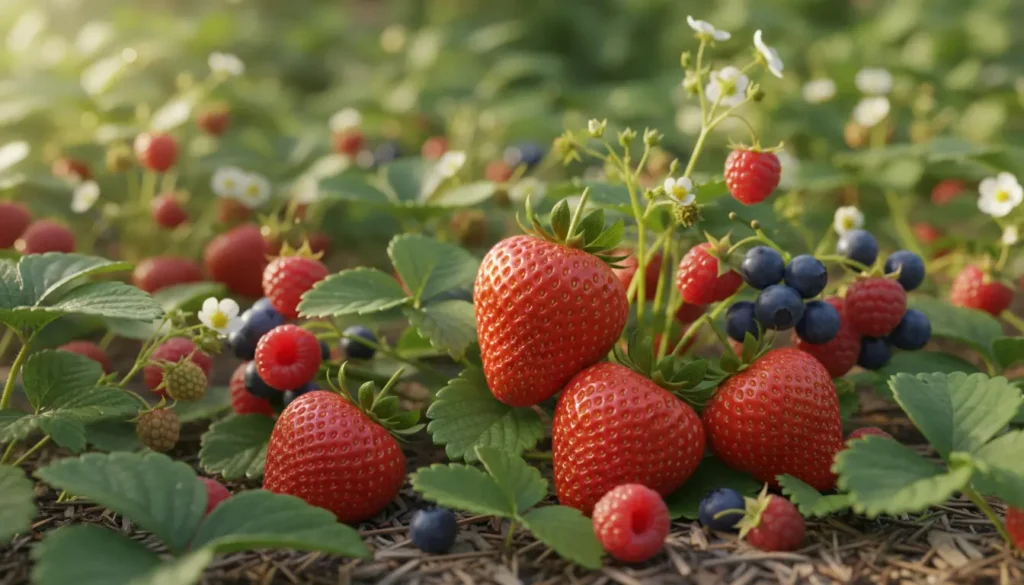
Growing and harvesting fresh berries year round from home patches is possible with planning, the right varieties, and small season-extending techniques. This guide explains practical steps to plan plantings, manage care, and harvest consistently through the year.
Harvest Fresh Berries Year Round: Start with the Right Plan
Begin by mapping your available garden space and light. Note microclimates, frost pockets, and sun hours to place plants where they will fruit best.
Create a simple harvest calendar. Stagger planting and select varieties with different ripening windows so one patch hands off to the next.
- List early, mid, and late-season varieties for each berry type.
- Allocate space for succession planting and small protected areas like cold frames.
- Plan irrigation and soil amendments ahead of time.
Choose Varieties to Harvest Fresh Berries Year Round
Variety choice is the foundation for year-round harvests. Mix everbearing, remontant, and single-season types across berry species.
Examples of good choices include:
- Strawberries: June-bearing for heavy spring harvests and everbearing or day-neutral for summer and fall fruit.
- Raspberries: Summer-bearing for large midseason crops and fall-bearing (remontant) for late summer to fall harvests.
- Blueberries: Early, mid, and late-season cultivars planted together to spread harvest.
Planting Layout for Home Patches
Group plants by water and soil needs but space varieties to extend fruiting. Use raised beds or containers to move protections when needed.
Keep fertile soil with good drainage. Blueberries need acidic soil, while strawberries and raspberries prefer neutral to slightly acidic mixes.
Harvest Fresh Berries Year Round: Techniques to Extend the Season
Season extension methods let you pick berries earlier and later than local norms. Combine passive and active approaches for best results.
- Cold frames and cloches: Raise daytime temperatures and protect from light frost.
- Row covers: Prevent frost damage and protect ripening fruit from birds.
- Windbreaks and mulch: Reduce plant stress and moderate soil temperature swings.
- Containers: Move potted berries into sunny, sheltered spots or indoors when cold arrives.
Use lightweight fabric covers for a few degrees of frost protection, and add a plastic-topped cold frame for sustained season extension when nights cool down.
Care and Maintenance for Continuous Harvests
Consistent pruning, feeding, and pest management keep plants productive across seasons. Adjust care by species and planting time.
Key tasks include:
- Pruning: Remove dead canes and thin crowded growth to improve air flow and fruit quality.
- Fertilizing: Apply a balanced fertilizer in spring and a light feed after heavy harvests.
- Irrigation: Maintain steady moisture during fruit set; drip irrigation reduces disease risk.
- Pest and disease control: Monitor weekly and use netting, traps, or organic sprays as needed.
Protecting Ripening Fruit
Birds and pests can ruin a harvest. Use lightweight netting to protect ripening berries without harming wildlife.
Hand-pick regularly to reduce fruit left for pests and to encourage continued production on some varieties.
Harvest Fresh Berries Year Round: Timing and Techniques
Harvest at peak ripeness for flavor and shelf life. Berries generally should come off the stem easily and show full color.
Pick in the cool morning when berries are firm and cool to the touch. Store immediately in a single layer in the refrigerator for best short-term freshness.
- Strawberries: Harvest when fully red and fragrant.
- Raspberries: Pick when the fruit detaches easily and is uniformly colored.
- Blueberries: Harvest at full blue with a slight dusting of bloom intact.
Storage and Simple Processing to Keep Berries Year-Round
To enjoy berries year-round, use quick processing methods. Freezing, drying, and preserving maximize your patch’s yield beyond the growing season.
- Freezing: Wash, dry, and freeze on a baking sheet before bagging to prevent clumping.
- Jam and preserves: Small-batch canning locks in summer flavor for months.
- Dehydrating: Make fruit leather or dried berries for snacks and baking.
Label and date packages so you rotate older stores first. Properly frozen berries keep best quality for up to a year.
Did You Know? Planting three types of blueberry varieties with different ripening times can extend a home harvest window by 4 to 8 weeks.
Small Case Study: Staggered Plantings for Steady Harvest
Maria, a homeowner in Oregon, used staggered plantings and two cold frames to harvest berries from May through November. She planted early and late blueberry cultivars, mixed everbearing strawberries, and a patch of remontant raspberries.
By rotating row covers in spring and moving containers under a porch in November, she extended picks by nearly three months each year. Simple freezing of surplus kept her stocked through winter.
Practical Checklist to Harvest Fresh Berries Year Round
- Map garden microclimates and light exposure.
- Choose staggered varieties: early, mid, and late-season types.
- Use cold frames, row covers, and containers to extend seasons.
- Maintain regular pruning, feeding, and pest checks.
- Harvest at peak ripeness and process surplus for storage.
With planning and a few simple tools, you can move from a short summer window to regular berry harvests nearly year-round. Start small, keep records of varieties and dates, and expand what works best in your home patch.